How to Choose a Gold Bracelet: A Practical Guide for San Mateo Shoppers


A gold bracelet is one of the simplest ways to add something lasting to your everyday style or give a gift that means something. But gold comes in different karats, colors, and styles, and those choices affect how the bracelet looks, how long it lasts, and what it costs. This guide covers what you actually need to know before you buy.
Table of Contents
ToggleUnderstanding Gold Karat
Karat measures how much of the metal is pure gold. Pure gold is 24 karat, but it is too soft for jewelry that gets worn regularly. To make it stronger, goldsmiths alloy it with other metals like copper, silver, or zinc. That mixture creates the karat levels you see on jewelry:
- 10k gold is 41.7% pure gold. It is the hardest and most affordable option. The color is slightly lighter than higher karat gold. Good for pieces worn every day in physically active situations.
- 14k gold is 58.3% pure gold. This is the most popular choice for everyday bracelets in the US. It has a warm, rich color, holds up well to normal wear, and is more affordable than 18k. The hallmark stamp is 585 or 14K.
- 18k gold is 75% pure gold. The color is deeper and more saturated than 14k, especially in yellow gold. It is softer than 14k, so it picks up scratches faster. Better for occasional wear or pieces kept for special occasions. The hallmark stamp is 750 or 18K.
For a bracelet worn daily, 14k gold is the most practical choice. For a bracelet given as a special occasion gift that will not be worn every day, 18k offers a richer appearance. To verify the karat of any bracelet, look for the hallmark stamp inside the clasp.
Gold Colors and How They Look
Yellow gold has the warmest tone and reads most traditionally. It complements olive, warm, and medium skin tones particularly well and pairs naturally with earth-toned clothing. Yellow gold is also the easiest to maintain because there is no surface plating that needs refreshing.
White gold is yellow gold alloyed with white metals like palladium and finished with rhodium plating. It looks similar to platinum but costs significantly less. The clean silver-white color works well with cooler skin tones and complements silver jewelry easily. White gold bracelets may need rhodium replating every few years to maintain their bright appearance.
Rose gold gets its pink tone from a higher copper content in the alloy. It flatters most skin tones and has been consistently popular for the last decade. Rose gold is also slightly harder than standard yellow gold because of the copper, which makes it a durable choice for everyday wear.
Bracelet Styles to Know
Gold bracelets come in a wide range of styles and the style you choose affects how it wears and how it pairs with other jewelry.
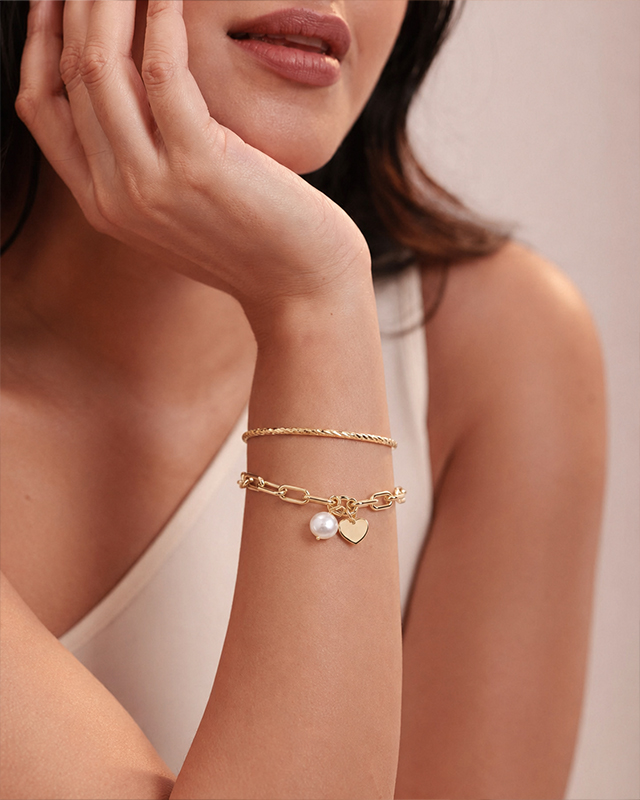
- Chain bracelets are the most versatile. Cable chain, curb chain, and herringbone are the most common link styles. A simple chain bracelet in 14k yellow gold works from casual daily wear through formal events without feeling out of place.
- Bangles are rigid circular bracelets that slide over the hand onto the wrist. They have no clasp, which means nothing to break. Bangles can be worn individually or stacked in multiples. They make a soft clinking sound when you move, which many people enjoy. A standard women's bangle has an inner diameter of about 2.5 inches.
- Cuffs are open, rigid bracelets that slip on over the side of the wrist. They sit flat against the skin and feel more architectural than bangles or chains. Cuffs work well as a statement piece worn alone.
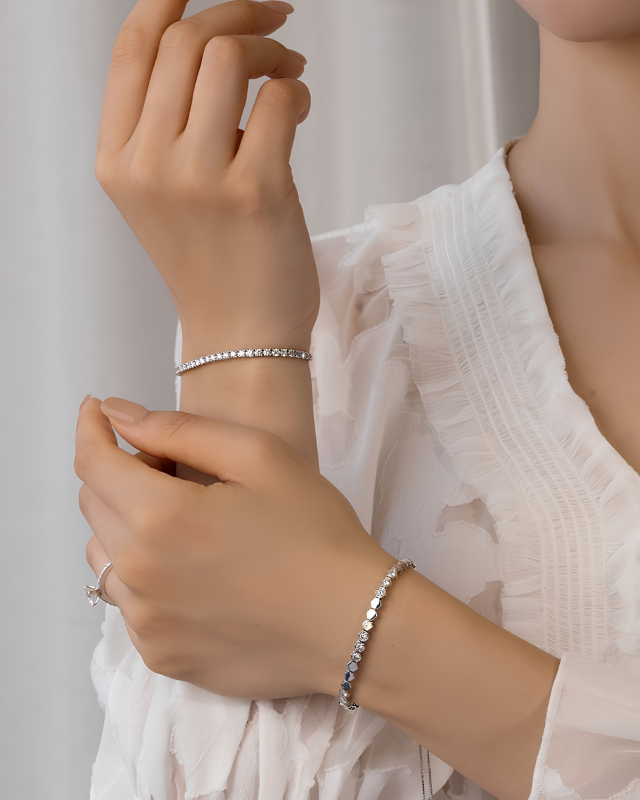
- Tennis bracelets feature a continuous line of diamonds or gemstones set in a straight gold chain. They are a more formal style, typically worn for events rather than daily use. The name comes from a 1987 incident at the US Open where tennis player Chris Evert stopped a match to look for her diamond bracelet that had fallen off her wrist.
- Charm bracelets are chain bracelets with individual charms attached. They are highly personal because each charm can represent a memory, place, or person. They tend to grow in meaning and complexity over time.
Getting the Right Size
A bracelet that does not fit properly will either slide off or be uncomfortable. Here is how to find the right size:
- Measure your wrist with a soft tape measure or a strip of paper held around your wrist bone. Note the measurement in inches.
- Standard women's bracelets are designed for a 7-inch wrist. If your wrist measures 6 inches or under, look for petite options around 6.5 inches. If your wrist is 7.5 inches or more, look for extended sizes or adjustable styles.
- Standard men's bracelets are typically designed for wrists between 7.5 and 8.5 inches.
- Add roughly 0.5 to 0.75 inches to your wrist measurement for a comfortable fit that allows the bracelet to move naturally. A bracelet sitting too tightly is more likely to catch on things and to stretch the clasp over time.
Women's Gold Bracelets
Women's gold bracelets tend toward lighter weights and more delicate details. A thin cable chain in 14k yellow or rose gold works as an everyday piece that pairs naturally with other jewelry. Bangles are popular gift choices because they feel celebratory and they do not require sizing. A thin bangle in 14k gold typically weighs between 3 and 8 grams. If you prefer something more substantial, a wider cuff or a diamond-set tennis bracelet adds visual weight without feeling heavy on the wrist.
For layering, choose bracelets with similar chain widths and metals so the stack looks intentional rather than mismatched. Two or three thin chains of slightly different lengths layer well. Mixing a slim bangle with a chain bracelet in the same metal color also works cleanly.
Browse our ladies diamond bracelet and bangle collection at Maaz Jewelers for styles available in 10k and 14k gold.
Men's Gold Bracelets
Men's gold bracelets work best when the design is clean and the metal weight is substantial enough to be visible. A flat curb link or Figaro chain in 14k yellow gold is a classic starting point. These styles work with both casual and business casual clothing and do not compete with a watch for visual attention.
For men who want something bolder, a wider link bracelet or a cable design in 14k adds presence without looking overdressed. Men's bracelets typically weigh between 10 and 20 grams for a standard wrist length, which gives them the physical substance that reads well against heavier fabrics like denim or wool.
Browse our men's bracelet collection at Maaz Jewelers for styles available in 10k and 14k yellow gold.
How to Care for a Gold Bracelet
Gold is relatively low maintenance compared to many other metals, but basic care extends its life noticeably. To clean a gold bracelet at home, soak it in warm water with a small amount of mild dish soap for 5 to 10 minutes, then gently brush the links with a soft toothbrush, rinse under clean water, and dry with a soft cloth. Do this every two to four weeks for a bracelet worn regularly.
You can wear a 14k or 18k solid gold bracelet in the shower without causing immediate damage. However, soap, shampoo, and chlorinated water can dull the surface over time. Removing the bracelet before long showers or swimming in chlorinated pools will keep the finish looking better longer.
Store gold bracelets separately from each other when not wearing them. Storing multiple metal pieces together causes scratching as they move against each other. A small pouch or a lined jewelry box with individual compartments works well. If your bracelet ever needs cleaning or a clasp repair, our jewelry repair team in San Mateo can help.
Frequently Asked Questions
What karat gold is best for a bracelet?
14k gold is the best choice for a bracelet worn every day. It contains 58.3% pure gold, which gives it a warm yellow color while the remaining alloys make it significantly harder than 18k or 24k gold. This hardness matters for bracelets because they move across surfaces, bump against things, and flex at the clasp repeatedly. If you are buying a bracelet for occasional or special occasion wear and want the richest yellow gold color, 18k (75% pure gold) is worth the added cost. 10k gold (41.7% pure) is the most affordable and the most durable, but the color appears slightly lighter than 14k or 18k.
Is 14k gold good for everyday wear?
Yes, 14k gold is specifically designed for everyday jewelry. It is the most popular karat in the United States for bracelets, rings, and earrings because it strikes the right balance between gold content, durability, and cost. It resists scratching and bending better than 18k and maintains a warm, rich appearance over years of regular wear. When shopping, look for the hallmark stamp inside the clasp: it will read 14K or 585. Either mark confirms you are getting 14k solid gold rather than gold-plated or gold-filled jewelry.
How do you tell if a gold bracelet is real?
The most reliable check is the hallmark stamp. Look inside the clasp or at the back of the bracelet for a karat marking: 10K, 14K, 18K, or their numeric equivalents 417, 585, or 750. In the United States, jewelry sold as gold is legally required to carry this marking. If there is no hallmark, or if the stamp reads GP, GF, or HGE, the piece is gold plated or gold filled rather than solid gold. A magnet test can also help: real gold is not magnetic, so if a magnet attracts the bracelet, it contains steel or other magnetic metals. A local jeweler can test any piece with acid testing or an electronic tester in minutes if you want certainty.
What size gold bracelet should I buy for a woman?
Measure her wrist with a soft tape measure or a strip of paper. A standard women’s bracelet is designed for a 7-inch wrist. Add about half an inch to the wrist measurement to get a comfortable wearing size. If the bracelet is a gift and you cannot measure her wrist, 7 to 7.5 inches fits most adult women. Bangles are often the safest gift choice because they come in standard diameters (approximately 2.5 inches inner diameter fits most adult women) and do not require a clasp fit. If you are in San Mateo, bring her to our store and we can try bracelets on and size a chain bracelet on the spot.
What is the difference between 14k and 18k gold?
14k gold contains 58.3% pure gold and 18k gold contains 75% pure gold. The practical differences are durability, color, and price. 14k is harder because the higher percentage of alloy metals strengthens the gold. It holds its shape and resists scratching better than 18k, making it a more practical choice for something worn daily. 18k has a richer, deeper yellow color because of the higher gold content. It is softer and more prone to scratching but is preferred for luxury pieces or jewelry worn less frequently. The price difference reflects the gold content: 18k gold bracelets cost meaningfully more per gram than equivalent 14k pieces.
How do you clean a gold bracelet at home?
Fill a small bowl with warm (not hot) water and add two or three drops of mild dish soap. Soak the bracelet for about 10 minutes. Use a soft-bristle toothbrush to gently scrub the links and the clasp, which is where dirt and skin oil collect most. Rinse the bracelet under clean running water and pat it dry with a soft, lint-free cloth. Let it air dry completely before storing or wearing again. Do this every two to four weeks for a bracelet you wear regularly. Avoid using toothpaste, baking soda, or abrasive cleaners, which can scratch softer gold alloys.
Can you wear a gold bracelet in the shower?
Solid 14k and 18k gold bracelets will not be damaged by occasional water exposure. However, the chemicals in soaps, shampoos, and conditioners leave a residue on the metal over time that gradually dulls the finish. Chlorine in swimming pools and hot tubs is more damaging and can weaken alloy metals over time. The practical recommendation is to remove your gold bracelet before swimming and before applying lotions, perfumes, or cleaning chemicals. For daily showers, keeping it on is generally fine as long as you rinse the bracelet with clean water afterward and dry it properly.
Find Your Bracelet at Maaz Jewelers in San Mateo
If you are looking for a gold bracelet in San Mateo, visit Maaz Jewelers at 316 Hillsdale Mall. We carry ladies diamond bracelets and men’s gold bracelets in 10k and 14k yellow gold, white gold, and rose gold. You can see the weight and color in person, try different styles on, and get sized for a chain bracelet before you buy. Our team is available to answer questions about karat, style, and fit without any purchase pressure.