Moissanite vs Diamond: Which One Is Right for Your Ring?

Choosing between Moissanite vs Diamond is one of the biggest decisions you will make when shopping for an engagement ring. Both stones sparkle, both look beautiful on a ring, and both can last for generations. But they are not the same, and knowing the real differences will help you pick the stone that fits your budget, your style, and what matters most to you.
Table of Contents
ToggleIn this guide, we will break down price, sparkle, hardness, and long-term value in simple terms. By the end, you will know exactly which stone makes sense for your ring, whether you are shopping in San Mateo or anywhere else in the Bay Area.
What Is Moissanite?
Moissanite is a gemstone made of silicon carbide. It was first found in a meteor crater, and it is now grown in labs because natural moissanite is too rare to mine. It looks a lot like a diamond at first glance, but it has its own unique sparkle, often described as more rainbow colored under bright light.
What Is a Diamond?
A diamond is a naturally formed stone made of pure carbon, created deep underground over billions of years under intense heat and pressure. Diamonds can also be grown in a lab today, using technology that copies the same natural process in a matter of weeks. Both mined and lab grown diamonds are chemically real diamonds, and both are valued for their clear, bright sparkle.
Moissanite vs Diamond: Price Comparison
Price is often the biggest factor when people compare moissanite vs diamond, and the gap is large.
- A one carat moissanite stone typically costs a few hundred dollars.
- A one carat natural diamond of similar clarity can cost several thousand dollars.
- A one carat lab grown diamond usually falls somewhere in between, though still well above moissanite.
This price difference means you can often get a much bigger-looking stone for the same budget if you choose moissanite. Many shoppers use the savings to upgrade the metal band or add extra detail to the setting instead.
Moissanite vs Diamond: Sparkle and Brilliance
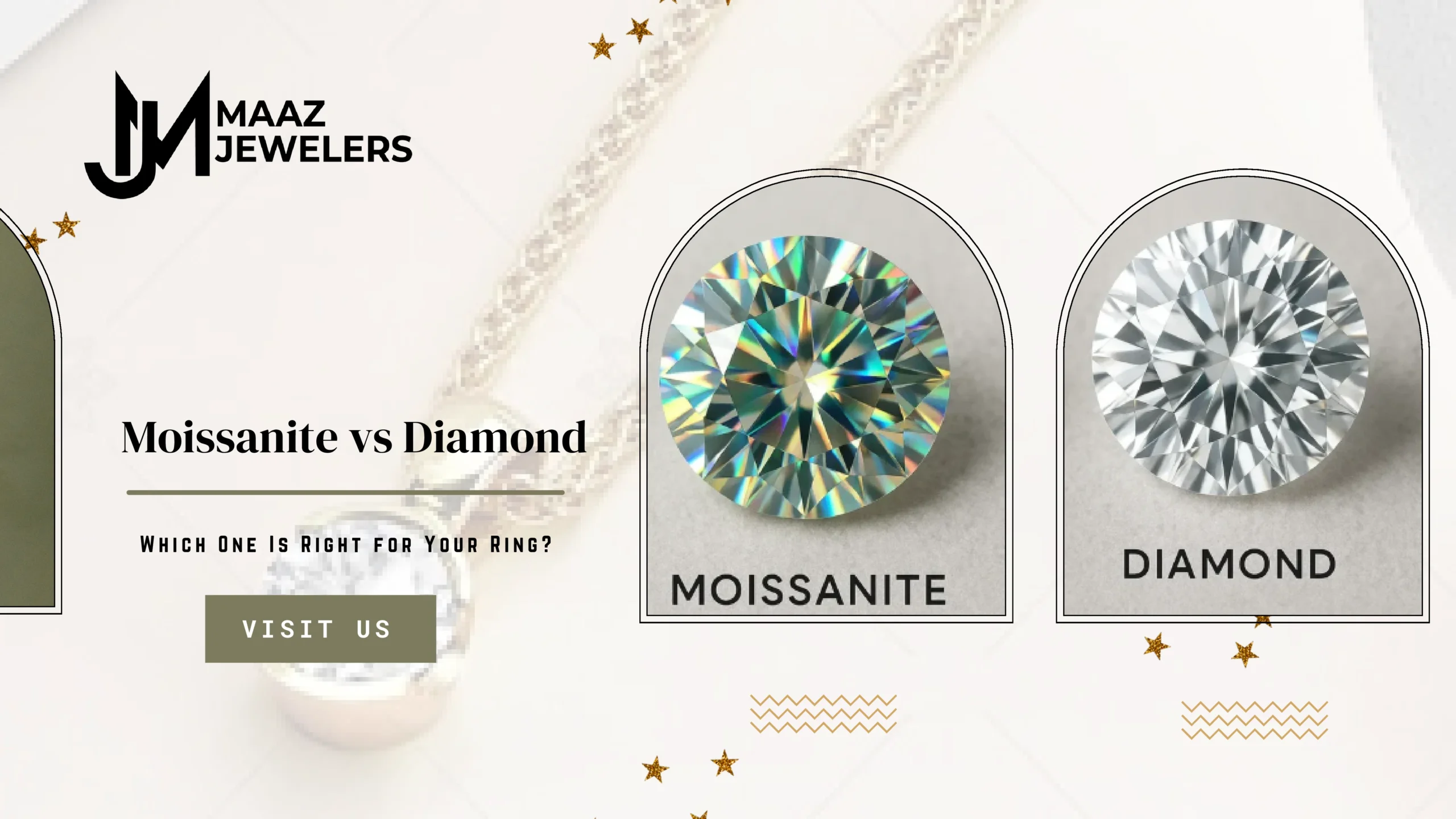
Both stones catch light beautifully, but they do it in slightly different ways. Diamonds tend to produce a bright white sparkle with balanced flashes of light. Moissanite has a higher refractive index, which means it bends light more sharply and can throw off small flashes of rainbow color, especially in direct sunlight.
Some people love the extra fire that moissanite gives off. Others prefer the classic white brilliance of a diamond. Neither one is wrong, it really comes down to personal taste.
Moissanite vs Diamond: Hardness and Durability
Durability matters a lot for a ring you plan to wear for years. Jewelers use the Mohs scale to measure hardness, with 10 being the hardest possible rating.
- Diamond sits at a perfect 10 on the Mohs scale, making it the hardest natural material on earth.
- Moissanite comes in just below at 9.25, which still makes it very tough and resistant to scratching.
In everyday terms, both stones can handle regular wear without much worry. Diamond has a small edge for anyone who works with their hands often or wants the absolute hardest option available.
Moissanite vs Diamond: Which One Holds Its Value?
This is where the two stones separate the most. Diamonds, especially natural ones, tend to hold resale value better over time because of their rarity and established market. Moissanite is affordable to buy, but it does not hold resale value the same way, since lab made stones are widely available and inexpensive to produce.
If resale value matters to you, a diamond is usually the safer choice. If you care more about getting a bigger, brighter stone for less money and plan to keep the ring rather than sell it, moissanite is a smart pick.
Moissanite vs Diamond: Which Looks Bigger for the Price?
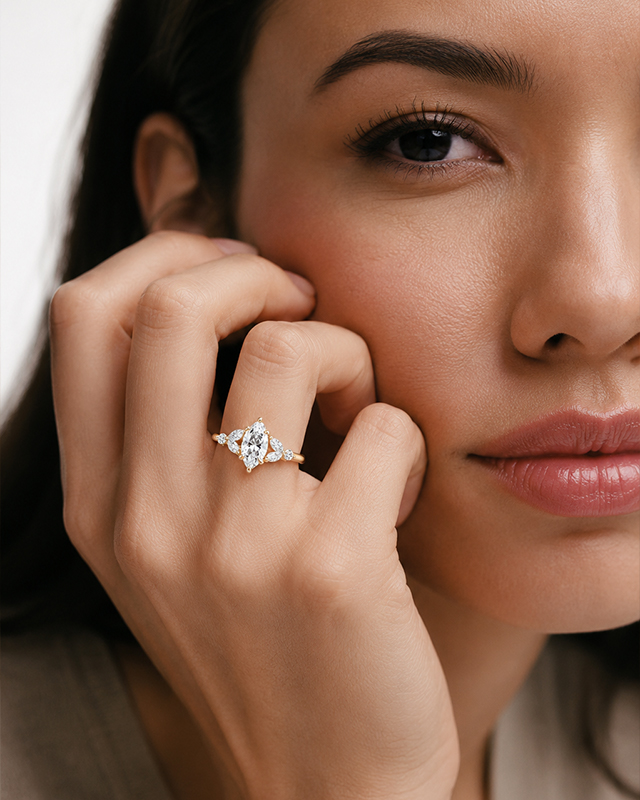
Because moissanite costs so much less per carat, shoppers on a budget can often afford a larger stone size compared to buying a diamond. A two carat moissanite ring can cost close to what a much smaller diamond ring would run, which is why moissanite has become popular with couples who want a bold look without a bold price tag.
How to Tell Them Apart?
To the naked eye, most people cannot tell moissanite and diamond apart, especially in a well made setting. A trained jeweler can spot the difference using a loupe or a specialized tester, since moissanite conducts electricity slightly differently than diamond. If you ever need to verify a stone, a local jeweler can check it for you in just a few minutes.
Which One Should You Choose?
There is no single right answer here, since it depends on what matters most to you.
Choose moissanite if:
- You want a bigger, brighter stone without a high price
- You care more about how the ring looks than long term resale value
- You like the extra sparkle and rainbow flashes moissanite gives off
Choose diamond if:
- You want the highest possible hardness rating
- Resale value and long term investment matter to you
- You prefer the classic, established choice for an engagement ring
A Note on Lab-Grown Diamonds
If you like the idea of saving money but still want a true diamond, a lab-grown diamond is worth a look too. It shares the same hardness and sparkle as a natural diamond but usually costs less, landing as a middle option between moissanite and a natural stone. Many jewelers, including Maaz Jewelers in San Mateo, carry both natural and lab-grown diamonds so you can compare them side by side in person.
Caring for Your Stone
Both moissanite and diamond are low-maintenance compared to softer gemstones, but a little care goes a long way.
- Clean your ring regularly with warm water and mild soap to keep it sparkling.
- Avoid harsh chemicals like bleach or chlorine, which can dull the metal setting over time.
- Bring your ring in for a checkup once or twice a year to make sure the setting is secure.
Final Thoughts
When you weigh moissanite vs diamond, the choice really comes down to what you value most. If a bigger stone and a smaller price tag matter more to you, moissanite is a smart option. If you want the hardest stone available and better resale value down the road, a diamond is the safer pick. Either way, the most important thing is choosing a ring that feels right for you and the person you are giving it to.
If you are in the San Mateo area and want to see moissanite and diamond side by side before you decide, stop by Maaz Jewelers. Our team can walk you through both options in person, answer your questions, and help you find a ring that fits your budget and your style.
Frequently Asked Questions
Is moissanite as good as a diamond?
Most people cannot tell them apart with the naked eye. A jeweler can tell the difference using special tools, since moissanite reflects light with a bit more rainbow color than diamond.
Can you tell the difference between moissanite and diamond by looking at it?
Moissanite is nearly as hard as a diamond and often sparkles even more under light, but it does not hold resale value the way a diamond does. It comes down to personal priorities rather than one stone being better than the other.
Why is moissanite so much cheaper than diamond?
Moissanite is grown in a lab using widely available materials, while diamonds, especially natural ones, are rarer and take much longer to form or grow, which drives the price up.
Does moissanite scratch easily?
No. Moissanite rates 9.25 on the Mohs hardness scale, just below diamond, so it resists scratching very well under normal daily wear.
Is moissanite a good choice for an engagement ring?
Yes. Moissanite is a popular choice for engagement rings because it looks similar to a diamond, costs much less, and holds up well over years of wear.