How to Buy a Diamond: Where to Spend, Where to Save, and What to Ask


Quick answer: To buy a diamond wisely, set a total budget first, choose cut quality before size, pick color and clarity grades that look good to the eye instead of chasing the top grades, ask for an independent grading report on any center stone, and decide between natural and lab-grown based on what matters most to you.
Table of Contents
ToggleMost people walk into a jewelry store knowing a budget and a feeling. The jargon comes next: cut, color, clarity, carat, certificates. It is easy to overspend on the wrong thing.
This guide is the short version of what we tell customers at the counter: where your money matters, where it does not, and what to ask. Each step links to a deeper guide if you want more.
How to Buy a Diamond in 9 Steps
1. Set a total budget
Decide what you can spend on the whole piece, including the setting and tax, not just the stone. Price depends on quality, size, and whether the diamond is natural or lab-grown. If cost is a concern, our guide to buying a diamond wedding ring on a budget shows where to trim without regret.
2. Choose cut first
Cut is how well a diamond handles light, and it drives brightness and sparkle more than any other factor. A well-cut diamond can look livelier than a larger one that is cut poorly. If you can only stretch on one thing, stretch on cut.
3. Remember that carat is weight, not size
A carat is a unit of weight, set at 200 milligrams. Two diamonds of the same carat weight can look different in size depending on shape and how they are cut. Look at them side by side, in person, before you decide.
4. Choose color and clarity for the eye, not the chart
The top grades cost a premium that most people cannot see once the stone is set. A common approach is to choose a near-colorless diamond and a clarity grade that looks clean to the eye at normal viewing distance, then ask your jeweler to show you the options. Seeing them side by side matters more than the letters.
5. Pick a shape you will love in ten years
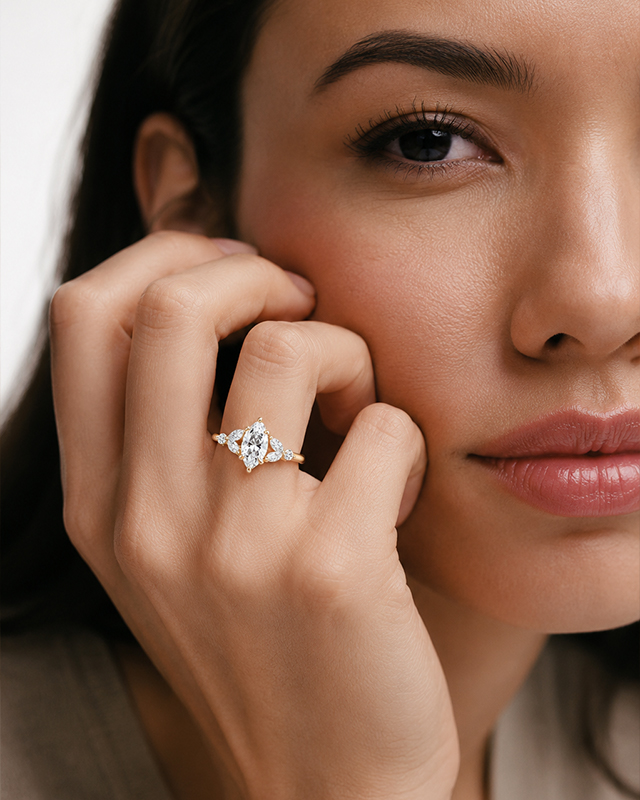
Shape changes how a ring sits on your hand. Round is the classic, and oval, emerald, pear, marquise, cushion, and others each have a different personality. Our guides to emerald cut, marquise, and pear shaped rings cover what each does best.
6. Ask for an independent grading report
For any significant center stone, ask for a report from an independent lab, and ask to see that it matches the stone in front of you. GIA and IGI are two widely used labs, and our guide to IGI vs GIA certificates explains how they differ. If a seller cannot produce a report, treat that as information.
7. Decide between natural and lab-grown
Both are real diamonds. Natural diamonds formed in the earth, and lab-grown diamonds are made in a controlled setting. Lab-grown stones often cost less for a similar size and quality. Whichever you choose, every listing should say which it is, using clear terms such as "lab-grown." Read the full lab-grown vs natural comparison, and if you are also weighing a diamond alternative, see moissanite vs diamond.
8. Ask what the seller can document about sourcing
If sourcing matters to you, ask direct questions: where do the stones come from, and what paperwork or supplier statements can you see? "Conflict-free" has a narrow meaning, and it is fair to ask a jeweler exactly what they mean by it. Our post on buying an ethical and conflict-free diamond ring goes deeper.
9. Protect the purchase
Get the policies in writing: return and exchange terms, resizing, and repairs. Consider an independent appraisal and insurance for a significant piece. You can read ours on the return and exchange policy page, and see what we handle on our repair services page.
Where to Spend and Where to Save
| Factor | Priority | What to do | Where you can save |
|---|---|---|---|
| Cut | Highest | Choose the best cut grade your budget allows | Do not compromise here |
| Color | Medium | Choose a near-colorless grade and check it in the setting | Skip the very top grades, which are hard to see once set |
| Clarity | Medium | Pick a grade that looks clean to the eye | Skip flawless grades if inclusions cannot be seen |
| Carat | Personal | Choose the size you want, then compare the look | A slightly smaller stone can free budget for better cut |
| Report | Required for center stones | Ask for an independent lab report | Not optional |
| Natural vs lab-grown | Personal | Choose based on values and budget | Lab-grown often costs less for the same size |
Prices and grades vary by stone, so ask to see two or three options at different price points before you decide.
8 Questions to Ask Before You Pay
- Is this diamond natural or lab-grown?
- Can I see the independent grading report, and does it match this stone?
- What are the cut, color, clarity, and carat weight?
- Does this stone look clean to the eye? Can I see it next to a higher and a lower grade?
- What metal is the setting, and what is its purity?
- What is your return and exchange policy, and are custom pieces final sale?
- Do you handle resizing and repairs, and how long do they take?
- What can you tell me about where the stone came from?
If you are choosing a jeweler too, use our 9-point checklist for choosing a jewelry store in San Mateo.
How We Help at Maaz Jewelers
We sell both natural and lab-grown diamonds, and every listing says which one you are looking at. You can see pieces in person, compare stones side by side, and ask us anything on this list.
If you have a design in mind, we can build it. See our engagement rings, browse solitaires, halos, and three-stone rings, or contact us about a custom piece. Planning the wedding too? Look at our bridal sets and eternity bands. Eligible items can be paid monthly through Affirm.
Not sure of a ring size? Try our ring size guide. You can learn more about the store on our About page.
Frequently Asked Questions
There is no single right number. Set a total budget for the whole piece, then put the most money into cut quality and let color, clarity, and size flex. Ask to see two or three options at different prices.
Cut. It controls how much light the diamond returns, so it has the biggest effect on sparkle. After cut, choose color and clarity grades that look good to the eye, then size.
Yes. Lab-grown diamonds are real diamonds made in a controlled setting instead of formed in the earth. Sellers should label them clearly. Read our lab-grown vs natural guide for price and value differences.
For any significant center stone, yes. An independent report lets you check the seller's description of the diamond against a lab's. See IGI vs GIA for how common labs differ.
It means no flaws are visible to the naked eye at normal viewing distance. Many people can save money by choosing a clarity grade that looks clean without paying for flawless grades. Ask to compare stones in person.
Not always. Carat is weight, so shape and cut change how large a stone looks. Compare candidates side by side on your hand.
Ready to See Diamonds in Person?
Stop by our showroom at 316 W Sailer Dr in San Mateo, call (650) 315-2525, or contact us to plan a visit. Bring this guide, and we will walk through it with you. You can also return to our homepage to browse.