IGI vs GIA: Which Report Should Your Lab-Grown Diamond Have?

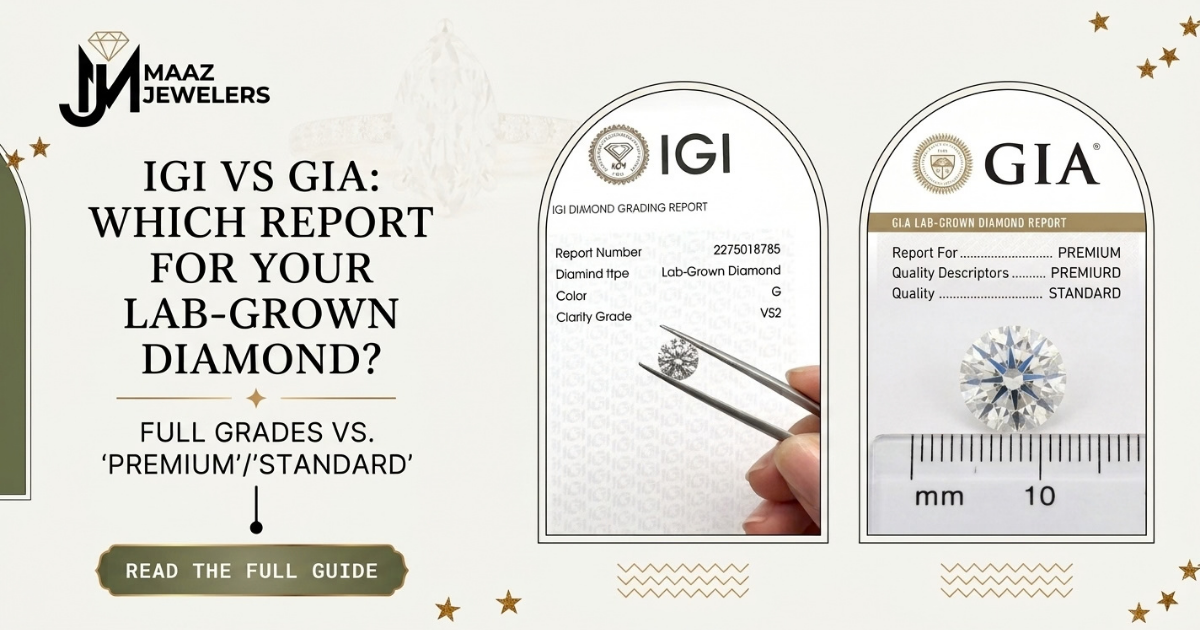
Quick answer: For a lab-grown diamond, an IGI report is usually the better choice. IGI still gives lab-grown stones full grades for color and clarity. Since October 1, 2025, GIA only labels lab-grown diamonds as “Premium” or “Standard.” For a natural diamond, a GIA report is still the top choice.
You found a lab-grown diamond you love. The price looks right. Then the seller hands you a paper with a few letters at the top, and you start to wonder. Is this the right report? Does it even matter?
It does matter. A diamond report is how you know what you are paying for. Two stones can look the same under store lights but be very different on paper. This guide explains IGI and GIA in plain words, so you can shop with confidence.
Table of Contents
ToggleWhat Is a Diamond Grading Report?
A diamond grading report is a document from a gem lab. Experts at the lab study the stone with special tools. Then they write down what they find.
Most reports cover the 4Cs:
- Cut: how well the diamond is shaped to catch and bounce light.
- Color: how white or slightly yellow the stone looks.
- Clarity: how many tiny marks are inside or on the surface.
- Carat: how much the diamond weighs.
A good report also tells you if the diamond is natural or lab-grown. It gives the stone its own report number, too. You can type that number into the lab’s website to check that the report is real.
Many people call this paper a “certificate.” Labs prefer the word “report,” but for shoppers, both words mean the same thing.
Who Is IGI?
IGI stands for the International Gemological Institute. It was founded in 1975 and has labs in many countries.
IGI was one of the first big labs to fully grade lab-grown diamonds. Because it started early, it now grades most of the lab-grown diamonds sold today. If you buy a lab-grown diamond from almost any store, it will likely come with an IGI report.
An IGI lab-grown report gives exact grades, like “E color” and “VS1 clarity.” Many IGI reports also list how the diamond was grown. You may see “CVD” or “HPHT” on the paper. These are the two main ways labs grow diamonds. Neither one is better. They are just two different methods.
IGI can also laser-inscribe the report number onto the thin outer edge of the diamond, called the girdle. You cannot see it with your eyes, but a jeweler can see it with a loupe or microscope.
Who Is GIA?
GIA stands for the Gemological Institute of America. It is a nonprofit, and it created the 4Cs grading system the whole jewelry world uses today. For natural diamonds, GIA is still the name most experts trust the most.
GIA’s history with lab-grown diamonds is a bit bumpy. It has changed its lab-grown reports more than once over the years. The biggest change came in 2025.
What Changed at GIA in 2025?
On June 2, 2025, GIA announced it would stop using its color and clarity grades for lab-grown diamonds. The new system started on October 1, 2025.
Here is how it works now. GIA first confirms the stone was made in a lab. Then it looks at color, clarity, and cut together. The diamond gets one of two labels:
- Premium: higher overall quality.
- Standard: meets GIA’s basic quality bar.
If a lab-grown diamond does not reach the “Standard” bar, GIA gives it no label at all.
Why did GIA make this change? GIA said most lab-grown diamonds now fall into a very small range of color and clarity. Growing methods have become so good that many stones look almost the same. So GIA decided that its detailed grades, which were built for natural diamonds, no longer made sense for lab-grown stones.
One more thing to know: GIA reports issued before this change are still valid. But any new GIA lab-grown report will say “Premium” or “Standard,” not something like “F color, VS2 clarity.”
IGI vs GIA at a Glance
| Feature | IGI | GIA |
| Best known for | Lab-grown diamonds | Natural diamonds |
| Lab-grown color grade | Yes, exact letter grade | No, “Premium” or “Standard” since Oct 2025 |
| Lab-grown clarity grade | Yes, exact grade | No |
| Shows growth method | Often (CVD or HPHT) | Confirms lab-grown origin |
| Online report check | Yes | Yes |
| How common on lab-grown jewelry | Very common | Less common |
| Best choice for | Lab-grown diamonds | Natural diamonds |
Why Most Lab-Grown Diamonds Come With IGI Reports
There are three simple reasons.
IGI got there first. When lab-grown diamonds became popular, stores needed a lab that could grade huge numbers of stones fast. IGI was ready. By the time other labs caught up, most sellers were already using IGI.
IGI gives you more detail. Exact grades let you compare two stones side by side. A “Premium” label alone does not tell you if one stone is E color and the other is G color. When you are spending real money, those details help.
IGI is built for volume. IGI handles a very large number of lab-grown stones every year. That helps stores get reports back quickly, which keeps more choices on the shelf for you.
Is IGI a Good Lab?
Yes. For lab-grown diamonds, IGI is trusted across the jewelry industry. Still, it is fair to share one point. Some experts believe IGI grades can run about half a grade softer than GIA grades. That means an IGI “F” might look close to what GIA would call a “G.”
So what should you do with this?
- Compare stones graded by the same lab. An IGI “F” and a GIA “F” are not always a perfect match.
- Look at the diamond in person when you can. Your eyes are the final judge.
- Focus on the stone, not just the letters. A well-cut diamond with a slightly lower grade can look brighter than a poorly cut one with a higher grade.
Which Report Should You Choose?
The right report depends on what you are buying. Here are the most common cases.
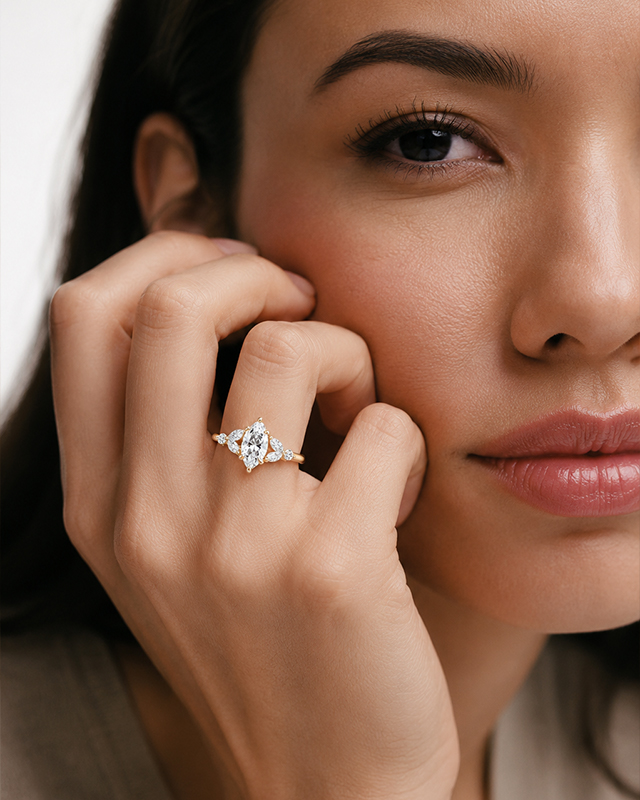
You are buying a lab-grown center stone for an engagement ring. Pick an IGI report with full grades. You will want exact color and clarity to compare stones and prices. Browse lab-grown solitaire rings or our full engagement ring collection to start.
You are buying a natural diamond. Look for a GIA report. It is still the gold standard for mined stones. If you are torn between the two types, read our guide on lab-grown vs natural diamonds first.
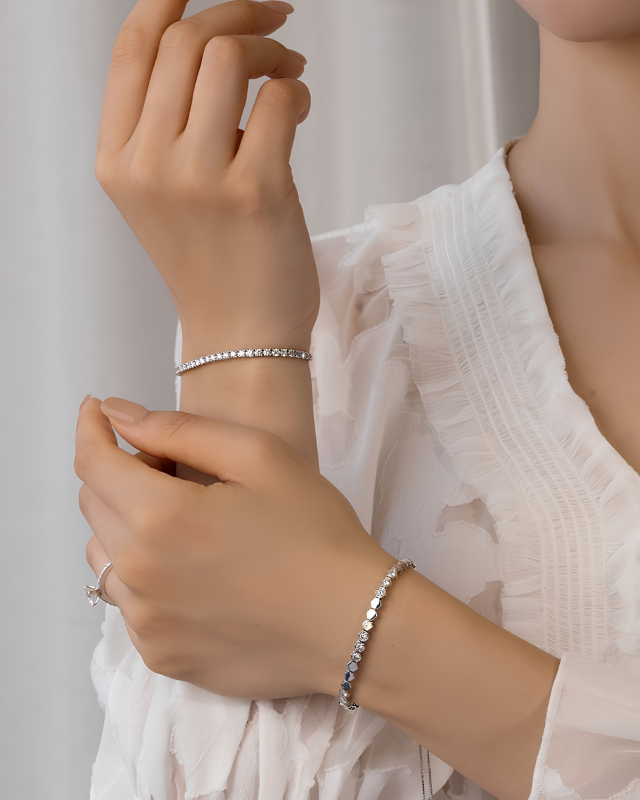
You are buying jewelry with lots of small diamonds. Pieces like a diamond tennis bracelet or an eternity band use many tiny stones. Labs almost never grade each small stone on its own. The piece may come with one report for the whole item, or with an appraisal from the store. Ask your jeweler where the listed color and clarity come from.
You want a lab-grown diamond and the GIA name. That is fine. Just know you will get a “Premium” or “Standard” label, not exact grades.
You are not sure the stone is a diamond at all. Some stones, like moissanite, look a lot like diamonds. A lab report settles the question. Our moissanite vs diamond guide explains how the two compare.
How to Check a Diamond Report in 4 Easy Steps
Never take a report at face value. Checking it takes about two minutes.
- Find the report number. It is printed near the top of the report.
- Look it up online. Go to the lab’s official website. GIA has a tool called Report Check. IGI has a report verification tool on its site, too. Type in the number.
- Match the details. The online record should match the paper. Check the shape, the carat weight, and the measurements in millimeters.
- Match the stone. If the diamond has a laser inscription, ask your jeweler to show it to you under magnification. The number on the stone should match the number on the report.
If anything does not match, stop and ask questions before you pay.
Red Flags to Watch For
Most sellers are honest. But a few warning signs are worth knowing.
- A report from a lab you have never heard of. Stick with well-known labs like IGI and GIA.
- A “certificate” made by the store itself. A store appraisal can be useful, but it is not the same as an independent lab report.
- A report number that does not show up online. A real report can always be looked up.
- No lab-grown label. Every lab-grown diamond report should clearly say the stone was grown in a lab.
- A price that seems too good for the grades. If a stone costs far less than similar stones with the same grades, find out why.
For more smart buying habits, see our tips for buying a diamond wedding ring on a budget and for buying an ethical and conflict-free diamond.
Does the Report Change the Price?
A little, but the grades matter more than the lab name. The 4Cs drive most of the price. A 1-carat, E color, VS1 diamond will cost more than a 1-carat, H color, SI1 diamond, no matter which lab graded it.
Keep one more thing in mind. Lab-grown diamonds do not hold their resale value the way natural diamonds tend to. A report from any lab will not change that. So buy a lab-grown diamond because you love how it looks, not as an investment.
Frequently Asked Questions
Does GIA still grade lab-grown diamonds?
Yes, but in a new way. Since October 1, 2025, GIA labels lab-grown diamonds as “Premium” or “Standard” instead of giving exact color and clarity grades. Stones that fall below the “Standard” bar get no label.
Is IGI or GIA better for lab-grown diamonds?
For most shoppers, IGI is better for lab-grown diamonds. It gives exact grades, so you can compare stones easily. GIA is still the top choice for natural diamonds.
Is an IGI certified lab-grown diamond a real diamond?
Yes. A lab-grown diamond is a real diamond with the same makeup as a mined one. The IGI report simply confirms it was grown in a lab and records its grades.
What does "Premium" mean on a GIA lab-grown report?
“Premium” means GIA judged the stone to have higher overall quality after looking at its color, clarity, and cut together. “Standard” means it meets GIA’s basic quality bar.
How do I look up an IGI report number?
Go to IGI’s official website and use its report verification tool. Type in the number from your report. The online details should match your paper report and your diamond.
Do the small diamonds in a tennis bracelet have reports?
Usually not one by one. Small stones are rarely graded on their own. The piece might have one report for the whole item or a store appraisal. Ask your jeweler how the quality was measured.
Are old GIA lab-grown reports still good?
Yes. GIA reports issued before the October 2025 change are still valid. You do not need to get your diamond graded again.
Get Help Reading Any Diamond Report
A diamond report should make you feel sure, not confused. At Maaz Jewelers, we are happy to walk you through any report, line by line, even one from another store. We can also show you lab-grown and natural diamonds side by side, so you can see the difference for yourself.
Visit us at 316 W Sailer Dr, San Mateo, CA 94403, call (650) 315-2525, or send us a message. We will help you find a diamond you can trust.