Lab-Grown vs Natural Diamonds: Which One Is Right for You?

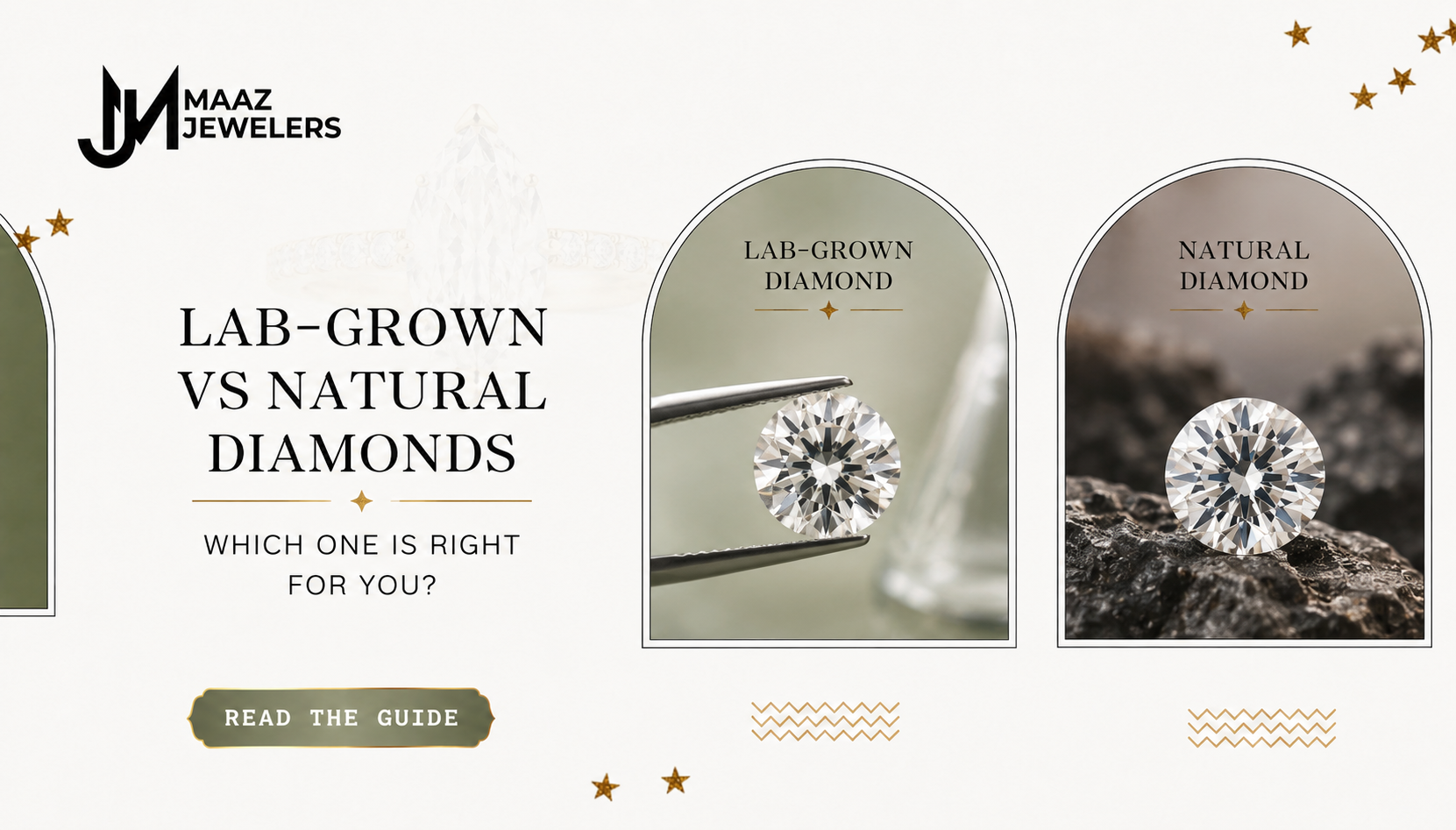
Picking a diamond used to mean one choice: natural or nothing. Today you have two real options, and both of them are real diamonds. If you are shopping for an engagement ring or any diamond jewelry, you have probably run into the term “lab-grown diamond” and wondered how it stacks up against a natural one.
Table of Contents
ToggleThe short answer is this. Lab-grown diamonds and natural diamonds are chemically the same. The only real difference is where they come from. One forms underground over billions of years. The other forms inside a lab in a few weeks. That single difference changes the price, the story behind the stone, and how it may hold value over time.
Let’s walk through what actually matters when you are choosing between the two.
What Is a Natural Diamond?
A natural diamond forms deep in the earth, about 100 miles down, under massive heat and pressure. Carbon atoms get squeezed together over one to three billion years. Eventually, volcanic activity pushes the diamonds closer to the surface, where miners can reach them.
Because this process takes so long and happens in only a few places on earth, natural diamonds are limited. Every one is a little different, shaped by the exact conditions it formed under. That rarity is a big part of why natural diamonds carry a certain kind of value and sentiment. Many people like knowing their diamond has existed for a billion years before it ever touched a ring.
What Is a Lab-Grown Diamond?
A lab-grown diamond starts as a tiny diamond seed. Scientists place that seed inside a machine that recreates the same heat and pressure found underground, or they use a process called chemical vapor deposition, which builds the diamond layer by layer using carbon-rich gas. Either way, the diamond grows in weeks instead of billions of years.
Here is the part that surprises most people. A lab-grown diamond is not fake, and it is not a diamond simulant like cubic zirconia or moissanite. It has the exact same crystal structure, the exact same chemical makeup, and the exact same hardness as a natural diamond. Gemologists grade it using the same 4Cs: cut, color, clarity, and carat weight.
Lab-Grown vs Natural Diamonds: Side-by-Side Comparison
Factor | Natural Diamond | Lab-Grown Diamond |
Formation | 1 to 3 billion years underground | A few weeks in a lab |
Chemical makeup | Pure carbon crystal | Identical pure carbon crystal |
Price | Higher | 30 to 50 percent less on average |
Rarity | Limited supply | Can be produced on demand |
Certification | GIA, AGS, and other labs | Same labs, same standards |
Resale value | Tends to hold value better long term | Prices have dropped sharply in recent years |
Environmental footprint | Mining-related impact | Lower land disturbance, but energy-intensive |
Are Lab-Grown Diamonds Real Diamonds?
Yes. This is the question people search for the most, so let’s be direct about it. A lab-grown diamond is a real diamond in every physical sense. It is not glass, and it is not a look-alike stone. The Federal Trade Commission and every major gem lab classify it as a diamond, with the word “lab-grown” or “laboratory-created” added to describe its origin, not its authenticity.
The confusion usually comes from the word “synthetic.” In everyday language, synthetic can sound like “fake.” In gemology, synthetic just means “grown instead of mined.” A synthetic diamond and a natural diamond both sparkle the same way under light, both score a 10 on the Mohs hardness scale, and both can earn a top clarity grade.
Can a Jeweler Tell the Difference?
Not with the naked eye, and not even with a standard jeweler’s loupe. Lab-grown and natural diamonds look identical to a trained eye without special equipment.
Gemologists need advanced tools to tell them apart. Natural diamonds usually contain trace amounts of nitrogen picked up during their long underground formation. Lab-grown diamonds typically do not. Labs use spectroscopy machines to detect this difference, along with tiny growth patterns invisible to the eye. This is also why every lab-grown diamond over a certain size should come with a certificate stating its origin. That paperwork matters more than a visual inspection ever could.
Price: The Biggest Difference
Price is where lab-grown and natural diamonds really split apart. A lab-grown diamond typically costs 30 to 50 percent less than a natural diamond of the same size, cut, and clarity. That gap has actually grown in recent years as lab-grown production has scaled up and become more efficient.
For a shopper, this opens up real options. It means you might afford a larger center stone, a higher clarity grade, or a nicer setting for the same budget. It is one reason lab-grown diamonds have become especially popular for engagement rings among younger buyers who want size and sparkle without the bigger price tag.
Do Lab-Grown Diamonds Hold Their Value?
This is the trade-off worth understanding before you buy. Natural diamonds have historically held or slowly gained value over long periods, partly because the supply is fixed and new mining has slowed down. They are not liquid investments, but they tend to retain a meaningful share of their worth.
Lab-grown diamonds do not behave the same way. Because they can be produced continuously, their prices have fallen quickly as manufacturing has improved, in some cases dropping by more than half over the past several years. If you are buying a diamond purely as a long-term store of value, that is an important factor. If you are buying it to wear and enjoy, it matters much less.
Which One Should You Choose?
There is no universally right answer here. It depends on what you care about most.
Choose a natural diamond if you value rarity, long-term value retention, and the idea of a stone that formed over a billion years before it reached you. Many people also feel an emotional connection to that natural history, especially for engagement rings meant to be passed down.
Choose a lab-grown diamond if you want more size and clarity for your budget, you care about a smaller mining footprint, or the origin story of the stone matters less to you than getting a bigger, cleaner diamond today.
Both are genuine diamonds. Both will sparkle the same way on someone’s hand. The decision really comes down to your priorities, not the quality of the stone.
What About the Environmental Impact?
This question comes up a lot, and the honest answer is that neither option is perfectly clean.
Diamond mining moves a large amount of earth to reach a small amount of diamond. It also affects local land and water in the areas where mining happens. Many mining companies now follow stricter environmental standards than they did decades ago, and some natural diamonds are marketed specifically for meeting those higher standards.
Lab-grown diamonds skip the mining step entirely, which removes that land disturbance. But growing a diamond in a lab takes a large amount of energy, since the machines need extremely high heat and pressure to work. Depending on where that energy comes from, a lab-grown diamond’s carbon footprint can still be significant.
In short, natural diamonds have a land impact, and lab-grown diamonds have an energy impact. Neither is impact-free, so if this matters to you, it is worth asking your jeweler directly about sourcing and energy practices rather than assuming one option is automatically the greener choice.
A Few Real-World Buying Scenarios
Sometimes it helps to see how this plays out for actual shoppers.
The budget-conscious couple. A couple wants a one-carat center stone but has a set budget. Choosing lab-grown lets them get a larger stone with better clarity than a natural diamond would allow at the same price. This is one of the most common reasons couples choose lab-grown today.
The heirloom shopper. Someone wants a ring that can be passed down for generations and holds meaning tied to rarity and history. A natural diamond fits that goal better, since its story and slow formation carry sentimental weight that a lab-grown stone does not offer in the same way.
The undecided shopper. Many people simply are not sure which matters more to them: budget or origin story. In this case, it often helps to see both types of stones side by side in person, under the same lighting, before deciding. The visual difference is essentially nothing, so the decision usually comes down to price and personal values once you have seen them both.
How to Shop With Confidence Either Way
Whichever you choose, a few habits will protect you as a buyer.
Always ask for a certificate from a recognized lab, such as GIA or IGI. This certificate should clearly state whether the diamond is natural or lab-grown, along with its cut, color, clarity, and carat weight.
Compare diamonds using the same grading criteria side by side, rather than comparing price alone. A lower price sometimes reflects a lower grade, not just a different origin.
Work with a jeweler who is upfront about origin and pricing. A trustworthy jeweler will explain the trade-offs honestly instead of steering you toward whichever option earns them more.
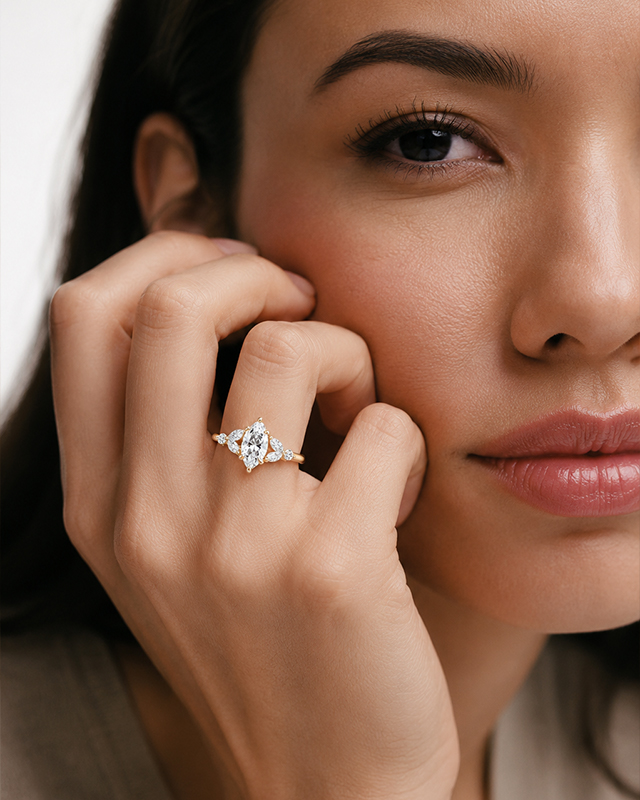
If you are shopping for an engagement ring and want to see both natural and lab-grown options side by side, our team at Maaz Jewelers can walk you through real stones in person so you can compare the sparkle, size, and price for yourself. You can also browse our full engagement collection online before your visit.
Frequently Asked Questions
Are lab-grown diamonds real diamonds?
Yes. They have the same chemical composition, crystal structure, and hardness as natural diamonds. The only difference is that they are grown in a lab instead of formed underground.
Do lab-grown diamonds hold their value?
Not as well as natural diamonds. Natural diamond prices have stayed relatively stable or grown slowly over time, while lab-grown diamond prices have dropped significantly as production has increased.
Can a jeweler tell if a diamond is lab grown?
Not by looking at it. Special lab equipment, like spectroscopy tools, is needed to detect trace differences such as nitrogen content. A certificate from a gem lab is the most reliable way to know a diamond’s origin.
Is a lab-grown diamond cheaper than a natural diamond?
Yes, typically 30 to 50 percent less for a stone of the same size and quality.
Which diamond is better for an engagement ring, lab-grown or natural?
Both work well. Lab-grown gives you more size and clarity for the price. Natural offers rarity and stronger long-term value retention. The better choice depends on what matters most to you.